Why Puzzles Alone Won't Make You Better at Chess
Puzzles are valuable, but they are only one piece of the chess improvement puzzle. Discover what else you need to truly grow as a player.
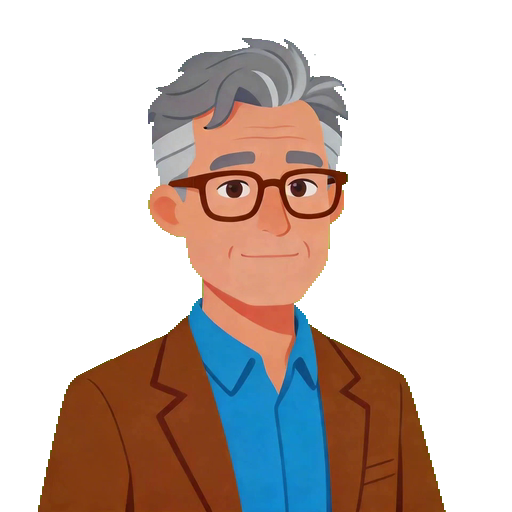 By Professor Archer, Chess coach, Old School Chess
Published 2026-02-01 | Last verified 2026-02-12
Professor Archer says: I see so many students who have solved thousands of puzzles and still lose games they should be winning. They come to me frustrated, asking what they are doing wrong. The answer, almost every time, is the same: they have been training one muscle while neglecting all the others. Chess puzzles are wonderful for sharpening your tactical eye, but tactics are only one dimension of a multi-dimensional game.
The Puzzle Trap
Chess puzzles are addictive, and that is by design. They offer a clear challenge, an immediate solution, and a satisfying rush of dopamine when you get the answer right. This makes them the most popular feature on virtually every chess platform. And for many players, puzzles become the entirety of their chess training. Solve puzzles, check your rating, solve more puzzles. Repeat indefinitely.
This is what we call the puzzle trap, and it is one of the most common reasons chess players plateau. The trap works like this: puzzles present positions where a tactical solution already exists. Your job is to find it. This is a useful skill, but it skips over the most important question in real chess: how did this position arise in the first place?
In an actual game, nobody tells you that a tactical opportunity exists. You have to recognize the potential for one, create the conditions for it, and then execute it. These are three distinct skills, and puzzles only train the third one. The first two, recognizing when tactics might be possible and maneuvering your pieces to create tactical opportunities, require a completely different kind of training.
This is why a player who solves puzzles brilliantly can still play poorly in real games. They are world-class executors who never learned how to set the stage. Old School Chess addresses this gap directly by integrating tactical training into a much broader educational framework.
The Missing Dimensions of Chess Training
A complete chess education has many dimensions, and puzzles address only one of them. Consider what else goes into playing a good game of chess. You need opening knowledge, not just memorized lines but an understanding of the plans and ideas behind different openings. You need strategic understanding, the ability to form long-term plans based on the characteristics of the position. You need endgame technique, knowing how to convert advantages and hold difficult positions.
Beyond these technical areas, you also need skills that are harder to quantify. You need patience, the ability to wait for the right moment rather than forcing something premature. You need resilience, the capacity to recover from a mistake in the middle of a game. You need time management, knowing when to think deeply and when to move more quickly. You need psychological composure, staying calm when the position gets complicated.
None of these skills are developed by solving puzzles. They are developed through playing and analyzing games, studying positions with a coach, and engaging in the kind of reflective learning that goes far beyond pattern recognition.
Professor Archer integrates all of these dimensions into your learning experience. A lesson might start with a puzzle to sharpen your tactical eye, transition into a discussion about the strategic themes in a particular opening, and conclude with a game where you practice applying everything together. This holistic approach is what produces well-rounded chess players.
Understanding the Positions Before the Tactics
Here is a profound truth about chess that puzzle trainers never teach: almost every tactical opportunity is the result of a strategic advantage that was built over many moves. The spectacular knight sacrifice did not come out of nowhere. It was made possible by careful piece coordination, control of key squares, and weaknesses created in the opponent's position over the preceding fifteen or twenty moves.
When you only study the tactic, you miss the story of how the tactic became possible. You see the fireworks but not the fuse. This is like watching the last five minutes of a great movie and thinking you understand the plot. The ending only makes sense in the context of everything that came before.
Professor Archer teaches chess with this narrative perspective. When analyzing a game, he does not skip to the decisive moment. He walks you through the entire game, showing how each decision contributed to the final outcome. You learn how the opening choices led to a specific type of middlegame. You see how a small positional advantage was gradually nurtured into a winning position. And when the tactic finally arrives, it feels inevitable, like the logical conclusion of a well-told story.
This narrative approach to chess is incredibly powerful because it teaches you to think in terms of processes rather than moments. In your own games, you start looking for ways to build advantages gradually rather than waiting for a tactic to magically appear. You become the author of your own chess stories, creating the conditions for success rather than hoping for lightning to strike.
How Old School Chess Uses Puzzles the Right Way
Old School Chess does not reject puzzles. Far from it. Puzzles remain an important part of the learning experience. But they are used thoughtfully, as one tool among many, always in the service of broader understanding.
When Professor Archer presents a puzzle, he does not simply ask you to find the best move. He provides context. Where did this position come from? What opening led to it? What strategic decisions created the tactical opportunity? After you solve the puzzle, the conversation continues. Why did that tactic work here? What features of the position made it possible? How could you create similar conditions in your own games?
This contextualized approach to puzzles transforms them from isolated exercises into windows onto deeper chess understanding. Instead of training your brain to spot a pattern in a vacuum, you are training it to understand the relationship between strategy and tactics, between preparation and execution.
Professor Archer also selects puzzles based on your current learning focus. If you have been studying piece activity, you will see puzzles where active piece placement enables tactics. If you have been working on pawn structure, you will encounter positions where pawn weaknesses create tactical vulnerabilities. This intentional integration ensures that puzzles reinforce your broader chess education rather than existing as a separate, disconnected activity.
The result is a learning experience where tactical sharpness develops naturally alongside strategic depth. You become a player who can both create and exploit opportunities, which is the hallmark of strong chess.
Building a Complete Chess Player
The goal of Old School Chess is not to produce fast puzzle solvers. It is to build complete chess players who can sit down at a board, in any position, against any opponent, and play with understanding, confidence, and enjoyment.
A complete chess player knows how to open a game with purpose. They understand the plans behind their chosen openings and can navigate unfamiliar territory using principles rather than memorization. They know how to evaluate a middlegame position, identifying strengths to leverage and weaknesses to target. They can form a plan and adjust it as the position evolves.
A complete chess player also knows when tactics are likely to appear. They recognize the signals: a king stuck in the center, an overloaded defender, pieces converging on a key square. And when the moment arrives, they execute with precision, not because they memorized the pattern but because they understand why it works.
Finally, a complete chess player knows how to play endgames. They understand the principles of king activity, the power of passed pawns, and the subtleties of different endgame types. This knowledge gives them confidence in the final phase of the game, where many players flounder.
Puzzles contribute to one slice of this picture. Old School Chess, with Professor Archer guiding you through every dimension of the game, builds the whole thing. The journey takes time, but every step is rewarding, and the destination is a relationship with chess that brings lasting satisfaction.
Questions About Puzzles and Chess Improvement
Should I stop doing puzzles entirely?
Not at all. Puzzles are a valuable part of chess training. The key is to not make them your only form of training. Pair puzzle solving with game analysis, strategic study, endgame practice, and reflective learning with a coach. When puzzles are one part of a balanced chess diet, they are extremely beneficial.
How many puzzles should I solve per day?
Quality matters far more than quantity. Solving five puzzles thoughtfully, understanding why each solution works, is more valuable than rushing through fifty. Professor Archer recommends spending time on each puzzle, thinking about the position before looking for the tactic, and reflecting on the solution afterward.
My puzzle rating is high but my game rating is low. Why?
This is one of the most common symptoms of the puzzle trap. Puzzles tell you a tactic exists and you just need to find it. In real games, nobody tells you that. You need strategic understanding to create positions where tactics become possible, and you need practical skills like time management and composure that puzzles do not develop.
What should I study besides puzzles?
Professor Archer recommends a balanced approach: opening principles, middlegame strategy, endgame fundamentals, and game analysis. The most valuable single activity is analyzing your own games with a coach, because it combines all of these areas and addresses your specific weaknesses directly.
Professor Archer says: If I could leave you with one thought, it would be this: do not stop doing puzzles. They are valuable. But pair them with real understanding. Learn why the tactic worked. Learn what kind of position made it possible. Learn how to create those positions in your own games. That is the difference between solving puzzles and playing chess.
Quick Quiz
Why can a player with a high puzzle rating still struggle in actual games?
- Because puzzles are easier than real games - Some puzzles are actually quite difficult. The issue is not difficulty but the type of skill being tested. Puzzles test execution in a known tactical situation, which is different from the full range of skills needed in a game.
- Because real games require creating tactical opportunities, not just finding them when told they exist (Correct) - Exactly. In a puzzle, you know a tactic is there. In a real game, you must build positions where tactics become possible and recognize when the moment has arrived. These skills require strategic understanding that puzzles alone do not develop.
- Because puzzle ratings are meaningless - Puzzle ratings are not meaningless. They measure a real skill: the ability to find tactical solutions in known tactical positions. That skill is valuable. It is just not sufficient on its own for playing strong chess.
- Because the puzzles were too easy - The difficulty of the puzzles is not the issue. Even players who solve difficult puzzles can struggle in games because the skill set required is broader than just tactical execution.
Try Before You Sign Up
Two free tools that show you how Professor Archer thinks about your game.
- Chess Rating Test - Twenty-five positions that estimate your rating in about fifteen minutes.
- Chess Personality Quiz - Discover which of eight playing styles fits you.