Why Adults Need a Different Approach to Learning Chess
You are not a child, and your chess education should not treat you like one. Discover an approach designed for how adults actually learn.
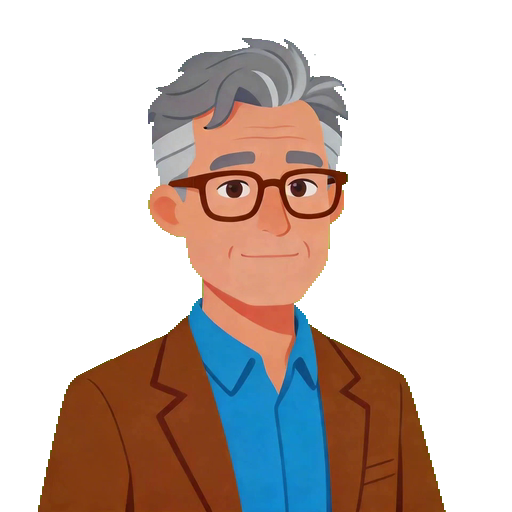 By Professor Archer, Chess coach, Old School Chess
Published 2026-02-01 | Last verified 2026-02-12
Professor Archer says: I have taught chess to children and adults for decades, and I can tell you plainly: adults do not learn the same way children do. Children absorb patterns through sheer repetition and play. Adults need to understand the reasoning behind what they are learning. They need to know the "why." And they deserve to be spoken to as intelligent people with rich life experience, not as blank slates.
Adults Learn Differently, and That Is a Strength
If you are an adult picking up chess for the first time, or returning after years away, you may feel like you are at a disadvantage. Children seem to absorb chess effortlessly, and the prevailing narrative suggests that if you did not start young, you missed the window. This narrative is both misleading and discouraging, and it is time to set the record straight.
Adults bring enormous advantages to learning chess. You have decades of life experience that inform your ability to think strategically. You understand cause and effect intuitively. You can grasp abstract concepts and connect them to patterns you have seen in other areas of your life. You have the discipline to practice deliberately and the self-awareness to identify your own weaknesses.
What adults sometimes lack is not ability but an appropriate learning environment. Most chess resources were designed with young, competitive players in mind. The pace is too fast. The explanations are too brief. The assumption is that you will figure it out through trial and error. For an adult who wants to understand the game deeply, this approach is frustrating and ineffective.
Old School Chess was built specifically for adult learners. The explanations are thorough. The pace is entirely yours to control. The material respects your intelligence while acknowledging that everyone starts somewhere. This is not chess education dumbed down for adults. It is chess education elevated to match how adults actually learn best.
Why Most Chess Apps Fail Adult Learners
Walk into any chess app on the market and you will notice a pattern: flashy graphics, gamified badges, rapid-fire puzzles, and ticking clocks. These features are designed to engage a younger demographic through dopamine-driven feedback loops. And for children, they often work. But for adults, they create a learning experience that feels shallow, rushed, and ultimately unsatisfying.
Adult learners do not need gold stars and streak counters to stay motivated. They need understanding. When an adult asks "Why is this move better than that one?" they expect a real answer, not a green checkmark and a push to the next puzzle. When they make a mistake, they want to understand the nature of the error, not just see a red X and move on.
The problem goes deeper than aesthetics. Most chess apps are built around pattern recognition through volume. Solve hundreds of puzzles, and you will start recognizing the patterns. This works to a point, but it creates a ceiling. You can recognize a pattern without understanding why it works, and that superficial recognition collapses under the pressure of an actual game where patterns combine in unexpected ways.
Adult learners need a different approach: one that builds understanding from the ground up, that explains the principles behind the patterns, and that treats each mistake as an opportunity for a meaningful conversation rather than a data point in a progress chart. This is exactly what Old School Chess provides.
The Power of Life Experience at the Chess Board
Here is something that might surprise you: many of the skills you have developed throughout your adult life transfer directly to chess. Strategic thinking, risk assessment, patience, resource management, and the ability to plan several steps ahead are all things you practice in your professional and personal life, often without realizing it.
A business executive who negotiates deals understands the concept of trading advantages. A teacher who manages a classroom knows how to assess multiple variables simultaneously. A parent who juggles schedules and priorities has practiced the kind of multi-tasking that translates into calculating variations on the chess board. Your life has been quietly preparing you for chess in ways a twelve-year-old simply has not experienced yet.
The key is connecting these existing skills to the chess board through clear analogies and explanations. When Professor Archer explains that controlling the center of the board is like securing the best position in a negotiation, the concept clicks immediately for an adult learner in a way it might not for a child who has never negotiated anything more complex than bedtime.
This is why Old School Chess leans heavily on explanation and analogy rather than rote memorization. Your life experience is not a handicap in chess. It is a superpower, and the right learning environment helps you activate it. When you understand why a principle works, your existing mental frameworks absorb it naturally and permanently.
Learning Without Embarrassment
Let us address something that holds many adults back from learning chess: embarrassment. There is a particular kind of vulnerability that comes with being a beginner at something when you are no longer young. You are successful in your career. You are competent in your daily life. And suddenly you are staring at a chess board, unable to see a checkmate in two that a ten-year-old would spot instantly.
This feeling is completely normal, and it says nothing about your intelligence or potential. Chess is a skill that requires specific training, just like playing the piano or speaking a foreign language. You would not feel embarrassed about not speaking Mandarin if you had never studied it. The same grace should apply to chess.
Old School Chess creates a learning environment where embarrassment has no place. Professor Archer does not compare you to other students. He does not time your responses. He does not flash leaderboards showing how you stack up against others. Your learning journey is private, personal, and entirely your own.
When you miss something obvious, the Professor treats it as a natural part of the learning process. He explains what you missed, why it was tricky, and how to spot similar patterns in the future. There is no judgment, no impatience, and no expectation that you should already know something you have never been taught. This safety is not a luxury. It is a prerequisite for genuine learning, especially for adults who have internalized the idea that they should already be good at everything they try.
Starting Your Chess Journey as an Adult
If you are ready to begin learning chess as an adult, the most important thing you can do is choose a learning environment that respects who you are. You are not looking for a toy. You are looking for an intellectually stimulating pursuit that will challenge your mind, provide endless depth, and connect you to a tradition that spans centuries.
Old School Chess was designed from the ground up for learners like you. The experience begins with a conversation, not a test. Professor Archer will learn about your background, your goals, and your current understanding of the game. From there, he will build a personalized learning path that matches your pace and your interests.
Some adult learners want to start with the absolute basics and build slowly. Others have some experience and want to fill in gaps in their understanding. Some are drawn to the strategic, positional side of chess, while others are fascinated by tactical combinations. Whatever draws you to the game, the Professor will meet you there.
The journey itself is the reward. Chess is one of those rare pursuits where the deeper you go, the more fascinating it becomes. Every layer you uncover reveals two more beneath it. And unlike many hobbies, chess is something you can enjoy for the rest of your life. It does not require physical stamina, expensive equipment, or a partner who is available at the same time. It just requires a curious mind, and you have already demonstrated that you have one by reading this far.
Questions from Adult Beginners
Am I too old to learn chess?
No. Full stop. People learn chess successfully at every age. While you may not become a grandmaster if you start at fifty, that is not the goal for most people. The goal is to enjoy a profound, intellectually stimulating game and to keep getting better over time. That goal is entirely achievable at any age.
Will I need to memorize a lot of openings?
Not at all, especially in the beginning. Professor Archer focuses on understanding principles rather than memorizing specific move sequences. When you understand why certain moves are strong, you can find good moves on your own without relying on memorization. Specific opening study comes much later, and even then, understanding always comes before memorization.
How much time do I need to commit each week?
Even fifteen to twenty minutes a few times a week can produce meaningful progress. The key is consistency rather than volume. Short, focused sessions with a coach are far more productive than occasional multi-hour cramming sessions. Fit chess into your life in a way that feels sustainable and enjoyable.
What if I get frustrated and want to quit?
Frustration is a normal part of learning any new skill. Professor Archer is experienced at recognizing when a student is struggling and adjusting the approach accordingly. Sometimes a change of pace, a different topic, or a simple encouraging conversation is all it takes to reignite the spark. You are never alone in this journey.
Professor Archer says: The adult learners I admire most are the ones who come to chess not because they have something to prove, but because they have something to explore. They bring curiosity, life experience, and a willingness to be a beginner again. That takes real courage, and I never take it for granted. If you are an adult thinking about learning chess, know that you are welcome here, and you are going to love the journey.
Quick Quiz
What is one key advantage that adult chess learners have over children?
- Adults have faster reflexes for speed chess - Actually, reflexes tend to slow slightly with age. But chess is not about reflexes. It is about understanding, strategy, and pattern recognition, where adults have significant advantages.
- Adults have life experience that helps them grasp strategic concepts intuitively (Correct) - Correct. Adults bring decades of experience in strategic thinking, risk assessment, and planning. These skills transfer directly to chess when paired with the right explanations and analogies.
- Adults can memorize more opening variations - Children often have an edge in raw memorization. The adult advantage lies not in memorizing more but in understanding more deeply, which is ultimately more valuable for long-term improvement.
- Adults can play more games per day - Most adults actually have less free time than children. But the quality of learning matters far more than the quantity, and adults are better equipped to learn deeply and efficiently.
Try Before You Sign Up
Two free tools that show you how Professor Archer thinks about your game.
- Chess Rating Test - Twenty-five positions that estimate your rating in about fifteen minutes.
- Chess Personality Quiz - Discover which of eight playing styles fits you.