How to Learn Chess as an Adult: Your Guide to Starting at Any Age
You are never too old to learn chess. Here is how to start.
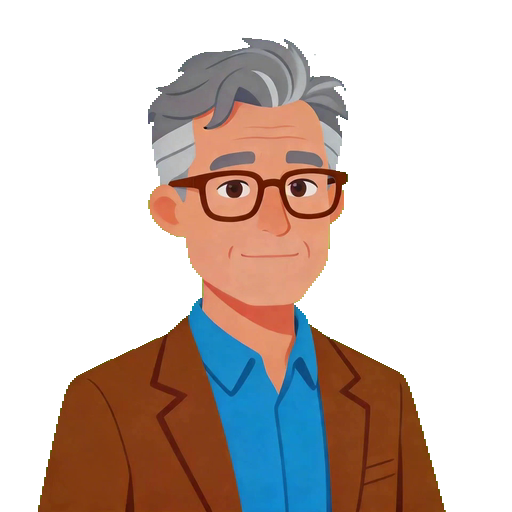 By Professor Archer, Chess coach, Old School Chess
Published 2026-02-01 | Last verified 2026-07-06
Professor Archer says: I was built to teach chess to adults. Every lesson I give, every concept I explain, is grounded in the fundamentals of the game and shaped by how adults actually learn. Along the way, I have come to know the stories of hundreds of people who picked up chess later in life, their struggles, their breakthroughs, and the moments they almost quit. So when I say I understand what it feels like to start late, I mean it. You worry that the window has closed, that your brain is not flexible enough, that the twelve-year-olds on the internet will crush you. Let me put those fears to rest: your adult brain is a magnificent learning machine, and chess is a game that rewards wisdom and patience, qualities you have in abundance.
Where You Are Now
You are an adult who either has never played chess or played casually years ago and wants to start seriously. You may feel intimidated by the complexity of the game, by the young players who seem to pick it up effortlessly, or by the sheer volume of chess content available online. Where do you even begin?
First, take a breath. The position you are in right now is not a disadvantage. It is simply different from learning as a child. Children learn chess through pattern exposure and repetition. Adults learn through understanding and logic. You will not learn the way a seven-year-old does, and that is perfectly fine. In many ways, adults improve differently than children, and that difference is actually an advantage: you can understand explanations, apply reasoning, and connect chess concepts to things you already know.
The challenges you face are real but manageable: limited time, possible frustration with the learning curve, and the temptation to compare yourself to younger or more experienced players. Whether you are learning chess after 50, picking it up in retirement, or simply starting fresh in your 30s or 40s, this guide is designed specifically for you, with practical strategies that respect your time and your intelligence.
Real Adults Who Started Late
Before we talk about how to learn, I want you to meet some people who were exactly where you are now. These are real adults who started chess later in life and shared their journeys publicly. I find their stories instructive, not because they became grandmasters (none of them did), but because they each found something genuine and rewarding in the process.
A father in his 40s, learning alongside his daughter. Tom Vanderbilt, a journalist, decided to learn chess when his four-year-old asked to play. He chronicled the humbling experience of being a complete novice as an adult, struggling with things children seemed to absorb effortlessly. His account captures something every adult beginner feels: the discomfort of being bad at something when you are used to being competent. What he discovered is that adults learn differently, not worse.
A 46-year-old true beginner from France. He describes starting with no natural spatial ability, no patience, no childhood chess experience. He made every common beginner mistake in the book: playing bullet games before he understood the pieces, buying advanced books, comparing himself to younger players. Over time, he found his rhythm through daily practice and slow games against humans. His honest, unflinching account resonates because he does not pretend it was easy.
Marcus, late 50s, Manhattan. He joined a group chess class after not having played since elementary school. He expected to feel lost, but found himself invested immediately. Within weeks he was replaying tactics from class in a notebook and spotting patterns faster than before. He credits the weekly check-ins and sense of shared learning with keeping him motivated.
A Chess.com user documenting six months as a complete beginner. In a widely-read forum post, this player tracked his first six months learning chess from scratch. He started at 800, dropped to 700, and gradually climbed back. His key insight, shared by many adult improvers, is that reviewing your games matters more than playing more games. He writes candidly about the ego challenges, the frustration of losing to teenagers, and the moment things started clicking. If you have been inspired by The Queen's Gambit, you are not alone.
What do all of these people have in common? None of them had special talent. None of them studied for hours a day. They each found a routine that fit their life, they stuck with it, and they improved. That is the only formula that works.
What to Study
- Start with the Rules and Piece Movement - Before anything else, make sure you are completely comfortable with how every piece moves, how captures work, and what the special moves are: castling, en passant, and pawn promotion. If you are an absolute beginner, start with how to set up a chess board. If you learned chess years ago and are coming back, you might be surprised by how much you have forgotten. Give yourself permission to start at zero. Use an interactive tutorial that lets you practice each piece individually. Spend two or three sessions on this, and do not move on until piece movement feels natural.
- Focus on the "Why" Behind Principles - As an adult, you have a superpower that children do not: you can understand reasons. When someone tells a child "develop your pieces," the child memorizes the instruction. When I tell you "develop your pieces," I can also explain why: because pieces in the center control more squares, pieces working together create threats, and an undeveloped piece is like an employee who has not shown up to work. Use your ability to understand reasoning to internalize principles deeply. You will need fewer repetitions than a child because you understand the logic.
- Choose Time-Efficient Study Methods - You probably have a job, a family, and responsibilities. You cannot study chess for four hours a day. The good news: you do not need to. Twenty to thirty minutes of focused daily practice is far more effective than three hours once a week. Use your phone for tactics puzzles during commutes or lunch breaks. Play one thoughtful game per day instead of five rushed ones. Quality beats quantity at every level, but especially for adult learners who need to maximize limited time.
- Play Slow Games Against Humans - Resist the temptation to play bullet and blitz games. Fast games punish slow thinkers, and as a beginner, you need time to think. Play games with at least 15 minutes per side. Use every second of your clock. After each game, spend five minutes reviewing it. Where did things go wrong? What would you do differently? Playing one slow, thoughtful game teaches more than ten frantic ones. And play against humans, not computers. Human opponents make human mistakes, which are the mistakes you need to learn to exploit. If you are about to play your very first game, go in with zero expectations and focus on enjoying the experience.
- Avoid the Comparison Trap - This is perhaps the most important advice I can give you. You will encounter players half your age who are twice your rating. You will read about prodigies who reached master level at fourteen. None of that is relevant to your journey. Your chess improvement is your own, measured against your own starting point. A forty-year-old who goes from 400 to 1000 in a year has achieved something beautiful and meaningful. Compare yourself only to your past self. If comparison or frustration starts to creep in, our guide on chess anxiety and handling losing streaks can help.
- Build Chess into Your Routine - Consistency matters more than intensity. Attach chess practice to an existing habit. Solve five puzzles with your morning coffee. Play a game during your lunch break. Review a short lesson before bed. When chess becomes part of your daily routine rather than an extra burden you need to schedule, it stops feeling like work and starts feeling like the mental exercise it truly is: satisfying, stimulating, and refreshing.
The Science of Learning Chess After 40
You might worry that your brain is past its prime for learning something new. The research says otherwise, and quite strongly. For a deeper look at this topic, see our full guide to chess and cognitive benefits.
Chess may reduce dementia risk by 9%. A landmark study published in JAMA Network Open in July 2023 followed 10,318 Australians aged 70 and older over a decade. Researchers at Monash University found that older adults who frequently engaged in active mental activities (including chess, card games, crosswords, and puzzles) had a 9% lower risk of developing dementia compared to those who did not. Notably, these active, strategic activities provided greater cognitive protection than passive pursuits like reading or craftwork. The researchers concluded that chess and similar games demand simultaneous engagement across multiple cognitive domains: memory, spatial reasoning, calculation, executive function, attention, and concentration.
A 12-week chess program improved cognition in older adults. A 2021 pilot study published in Geriatric Nursing tested a structured chess training program with older adults in care settings. Participants attended two one-hour chess sessions per week for twelve weeks. The results showed significant improvements in general cognitive status, attention, processing speed, and executive function, plus improved quality of life scores. The researchers concluded that chess training is a viable, safe, and practical intervention for maintaining cognitive health in later life.
Chess is a protective factor against dementia. A scoping review of 21 studies on chess and dementia published in the International Journal of Environmental Research and Public Health concluded that chess acts as a potential tool to delay dementia onset through cognitive stimulation. The review found that the concept of cognitive reserve (the brain's ability to tolerate more damage before showing symptoms) is strengthened by complex mental activities like chess. Individuals with higher cognitive reserve can maintain daily functioning for longer, even when age-related brain changes are occurring.
Adults learn differently, not worse. As Harvard's School of Public Health has noted, the relationship between chess and cognitive health is real but nuanced: people drawn to chess may already be higher-performing. The key takeaway from the research is not that chess is a magic pill, but that active mental challenge, consistently practiced, is one of the best things you can do for your brain at any age. Does chess make you smarter? The evidence strongly suggests it keeps your mind sharper for longer.
The real enemy is not age. It is inactivity. The Monash researchers found that the link between mentally stimulating activities and reduced dementia risk held regardless of gender, education level, or socioeconomic status. What mattered was whether people actually did the activities, not who they were.
Chess is not just a game for you. It is a cognitive investment. Every puzzle you solve, every game you play, every pattern you recognize is your brain building and reinforcing neural pathways. Professor Archer does not say this to flatter you. He says it because the peer-reviewed evidence supports it.
Typical Study Schedule
| Day | Activity | Time |
|---|---|---|
| Monday | Solve 5-10 beginner tactics puzzles (phone or computer) | 15 min |
| Tuesday | Play 1 slow game (15+10 time control) | 30 min |
| Wednesday | Review yesterday's game and find 2-3 key mistakes | 15 min |
| Thursday | Watch a short beginner lesson or video (one topic) | 20 min |
| Friday | Solve 5-10 tactics puzzles | 15 min |
| Saturday | Play 1-2 games and briefly review each one | 40 min |
| Sunday | Rest, or play a casual unrated game for pure enjoyment | 0-20 min |
How Old School Chess Helps You Stay on Track
A schedule like the one above looks simple on paper, but actually following it day after day is where most adults struggle. You sit down to practice and think: which puzzles should I do? What kind of game should I play? How do I review a game properly? The decisions pile up before you have even moved a piece.
That is why Old School Chess includes a built-in daily training planner. Each day, it lays out exactly what to focus on based on where you are in your learning journey. One day it might suggest a short lesson on piece development followed by five targeted tactics puzzles. The next day, it points you toward a slow practice game with specific things to watch for. It removes the guesswork so you can spend your limited time actually learning instead of deciding what to learn.
The planner adapts to your pace. If you missed a few days, it picks up where you left off rather than making you feel behind. If you are progressing quickly, it adjusts the difficulty of puzzles and introduces new topics when you are ready. Think of it as Professor Archer setting out your homework each morning: clear, focused, and never more than you can handle in a single sitting.
What to Expect: Your First Six Months
Every adult learner wants to know: how long will this take? Here is an honest timeline based on what I have observed from adult beginners.
Month 1: The Rules Feel Natural. You stop having to think about how each piece moves. Castling no longer confuses you. You understand check and checkmate and know the difference between check and stalemate. You are still losing most games, and that is completely normal. You are building the foundation that everything else sits on.
Month 2: Patterns Start to Appear. You begin to see basic tactics like forks, pins, and simple checkmate patterns before they happen. You catch yourself thinking "if I move here, they cannot take because..." This is your brain forming chess-specific neural pathways. It is a quietly thrilling moment when it first happens.
Month 3: Your First Wins Feel Earned. You win a game not because your opponent blundered catastrophically, but because you executed a plan. Maybe you developed all your pieces, controlled the center, and launched an attack that actually worked. The win feels different from the lucky ones. This is when many adults become properly hooked.
Months 4-6: The Plateau and the Breakthrough. Around month four, many adults hit a plateau where improvement seems to stall. This is normal and temporary. Your brain is consolidating what it has learned. Researchers call this process "chunking," where individual pieces of knowledge merge into larger, more automatic patterns. Keep practicing. The breakthrough usually comes when you start recognizing patterns automatically rather than having to consciously calculate every possibility. By month six, most consistent adult learners have a solid understanding of basic strategy, can hold their own in casual games, and are ready to start studying openings and endgames with real purpose.
Where most adults land after six months of consistent practice: Between 800 and 1200 online rating, depending on how much time they invest. That puts you firmly in the "I can play a real game of chess and enjoy it" territory, and well ahead of most casual players. If you want a detailed plan for reaching your first milestone, see our beginner to 800 guide.
Why Old School Chess for Your First Six Months
Those first six months are where most adults quit. Not because chess is too hard, but because the experience of learning feels wrong. The apps are built for competitive teenagers. The YouTube channels assume you already know chess notation. The forums are full of arguments about openings you have never heard of. It is overwhelming, isolating, and often quite unfriendly to beginners.
That is exactly why Old School Chess exists. Professor Archer was designed to be the coach you wish you had in month one: patient, clear, and respectful of your intelligence. He does not rush you. He does not assume you know things you do not. He explains the why behind every concept, because that is how adult brains learn best.
The Old School Chess curriculum is structured around the way adults actually have time to learn: short, focused lessons you can do with your morning coffee. Tactics puzzles that adapt to your level rather than crushing your confidence. A pace that respects the fact that you have a job, a family, and maybe twenty minutes between dinner and bed.
If you are reading this and wondering whether to start, start. If you have tried before and quit, try again, but this time with a guide that was built for someone like you. Your first six months do not have to feel like a struggle. With the right structure, they can feel like what chess is supposed to feel like: stimulating, satisfying, and genuinely fun.
Common Mistakes at This Level
The most common mistake adult beginners make is trying to learn too much at once. You read about the Sicilian Defense, the King's Indian, the London System, rook endgames, and tactical motifs all in the same week, and nothing sticks. Resist the urge to consume everything. Pick one topic per week and learn it well. Depth beats breadth at every stage, but especially at the beginning.
The second mistake is playing too many games without review. Every unreviewed game is a wasted learning opportunity. You made mistakes in that game (we all do) and if you do not identify them, you will repeat them. Even a two-minute glance at the critical moments of a game is better than nothing.
Third, many adult beginners are too hard on themselves. You lose a game to a teenager and feel humiliated. You miss a tactic you "should have" seen and call yourself stupid. Stop. Chess is hard. It is one of the most complex games humans have ever invented. Every player at every level makes mistakes. Give yourself the same patience and encouragement you would give a friend.
Finally, some adults treat chess purely as study and forget to have fun. Play silly openings occasionally. Try a gambit you read about. Challenge a friend who does not know the rules and teach them. The moment chess stops being enjoyable is the moment you should reassess your approach.
Frequently Asked Questions
Am I too old to get good at chess?
No. Full stop. While it is true that most grandmasters start as children, the vast majority of chess players are not aspiring grandmasters. Adult beginners regularly reach 1200, 1500, and even higher ratings with consistent practice. Your goal is not to become a world champion. Your goal is to enjoy chess and improve steadily, and there is no age limit on that.
How long does it take to learn chess as an adult?
Most adult beginners who practice consistently for twenty to thirty minutes daily can learn the rules and basic strategy within a few weeks. Reaching a level where you can play competitive casual games (roughly 800 to 1200 online rating) typically takes three to six months. The most important factor is not hours spent but consistency: a little bit every day beats marathon sessions once a week.
Is chess harder to learn as an adult than as a child?
It is different, not harder. Children absorb patterns through repetition and play. Adults learn through understanding and reasoning. In some ways, adult learning is more efficient: you can grasp strategic concepts immediately that a child might need months of experience to internalize. The main challenges adults face are limited time, the temptation to compare themselves to younger players, and the discomfort of being a beginner at something. None of these are insurmountable.
How long until I can beat my friends?
If your friends are casual players who learned the rules but never studied, you can expect to consistently beat them within a few weeks of focused practice. If they are experienced players, it will take longer, but you will close the gap steadily. The key is not to measure your progress by individual games but by your overall rating trend and your growing understanding of the game.
What is the best way to learn if I only have 15 minutes a day?
Fifteen minutes a day is plenty. Alternate between three activities: solving tactics puzzles (to sharpen your pattern recognition), playing one slow game (spread across multiple days if needed, using correspondence or daily chess), and reviewing a completed game (to learn from your mistakes). Consistency with 15 minutes daily will get you further than sporadic hour-long sessions.
Should I read chess books or watch videos?
Choose the medium that you enjoy and will stick with. Some adults prefer books because they can go at their own pace and re-read difficult sections. Others prefer videos because they find them more engaging and easier to follow. Both are effective. The best resource is the one you actually use. I would recommend starting with videos for the basics and then moving to books as you become more comfortable with the notation and terminology.
What is the best chess app for adults over 45?
Old School Chess was built specifically for adult learners aged 45 and over. Unlike Chess.com and Lichess, which are designed primarily for competitive players and younger audiences, Old School Chess features Professor Archer, an AI coach who teaches with patience, context, and respect for your intelligence. The lessons are structured for adult brains, the pace is designed for busy lives, and there are no flashing timers or teenage opponents. See how we compare to other platforms (/compare/chess-com-vs-old-school-chess).
Professor Archer's Advice
I want to speak directly to the fear that many adult beginners carry: the fear of looking foolish. You are a competent adult, perhaps successful in your career, and here you are struggling with a board game that children seem to master effortlessly. That feeling is real, and I honor it. But I also want to gently dismantle it.
Chess is not a measure of intelligence. It is a skill, like playing piano or speaking a foreign language. You would not feel foolish for struggling with Mandarin Chinese at age forty. You would expect a learning curve. Chess deserves the same grace.
The adults who improve the most share three habits. First, they practice a little bit every day rather than cramming once a week. Second, they focus on understanding rather than memorizing. Third, they keep a sense of humor about their mistakes. One learner I came across used to say, "Well, that was a creative way to lose my queen." She went from absolute beginner to 1100 in eight months. You can enjoy chess without obsessing over your rating, and often that is when the real progress happens.
Your brain is capable of learning chess at any age. Neuroscience research suggests that adult brains continue to form new connections throughout life, especially when engaged in complex tasks. Chess is exactly the kind of mental health investment that keeps your mind sharp and engaged. You are not just learning a game. You are building cognitive resilience.
Welcome to chess. The board is set. Your move.
Professor Archer says: I have seen hundreds of adults learn chess from scratch, and the ones who succeed share one quality: they give themselves permission to be bad. Not forever, just for now. They play, they lose, they laugh, they learn. Chess does not care about your age, your career, or your past. It only asks: are you willing to sit down, look at the board, and think? If the answer is yes, then chess will give you more than you ever imagined. It has changed lives. It can change yours too.
Quick Quiz
What is the most important habit for an adult beginner to develop?
- Memorize as many opening variations as possible - Opening memorization is not important for beginners of any age. Understanding principles is far more valuable than memorizing moves that your opponents will not follow anyway.
- Play as many fast games as possible to gain experience quickly - Fast games reinforce speed over understanding. For adult beginners, slow games where you have time to think and apply what you are learning are much more beneficial.
- Practice a little bit every day and review your games (Correct) - Correct! Consistent daily practice, even just 15-20 minutes, combined with reviewing your games to learn from mistakes, is the fastest path to improvement for adult beginners. Regularity and reflection beat volume every time.
- Study grandmaster games to learn the highest level strategies - Grandmaster games are too advanced for beginners. The ideas are complex and the level of play is far beyond what a beginner can apply. Start with beginner-level material and work your way up.
Measure Where You Stand
Start the roadmap from an honest number, then track it.
- Chess Rating Test - Twenty-five positions that estimate your rating in about fifteen minutes.
- Elo Calculator - See exactly how any result changes your rating.